

National Chocolate Day
Today, 28th October, is National Chocolate Day, the perfect time to celebrate everyone’s favourite treat. But behind every bar of chocolate lies a global story of farmers, fair pay, and climate change. Here’s why choosing Fairtrade chocolate makes a real difference for both people and the planet.
What is Fairtrade?
Fairtrade is the world’s most recognised sustainability label, helping to make global trade fairer for the people who grow our food and produce the goods we enjoy. It supports small-scale farmers and workers to earn a fair income, work safely, and protect the environment.
Fairtrade products include bananas, flowers, chocolate, coffee, sugar, tea, and wine (1), and since today is National Chocolate Day, it’s the perfect time to highlight how chocolate plays its part.
Fairtrade ensures fairer prices through a guaranteed Minimum Price, offers a Fairtrade Premium for community projects, promotes safe and equal working conditions, and supports climate-smart farming to protect nature. In short, Fairtrade helps create a trading system that values people, fairness, and the planet (1)
How Fairtrade Works?
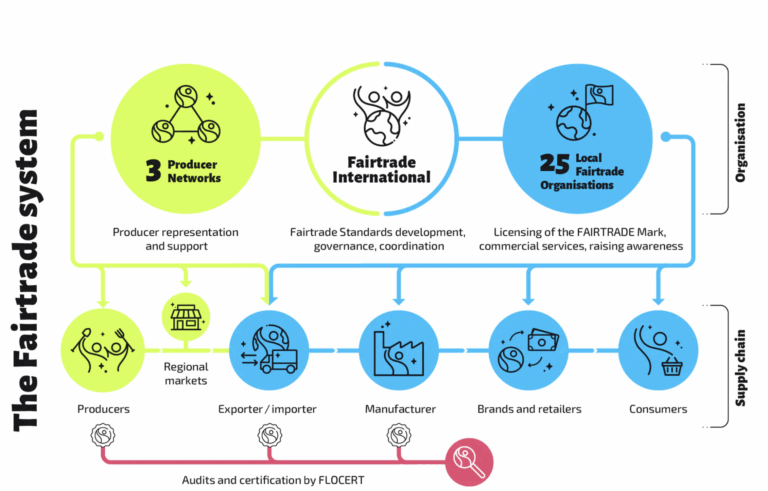
Fairtrade is more than just a label, it’s a global system that makes trade fairer and more sustainable.
The Fairtrade Mark stands out for its standards on fair prices, safe working conditions, and environmental care. These standards are developed with farmers and workers, and verified through independent checks by FLOCERT, which audits the entire supply chain from farms to factory packaging.
Fairtrade teams provide local training and support, helping farmers improve sustainability, adapt to climate change, and strengthen their communities through programmes on gender equality and youth leadership.
It also connects producers with responsible businesses, supports ethical sourcing, and campaigns for trade justice through schools, universities, and local groups.
Globally, Fairtrade brings together three regional producer networks, 25 national organisations, and Fairtrade International, the non-profit that sets global standards, creating a worldwide network with local roots and shared values (1).
Cocoa: The Heart of Chocolate
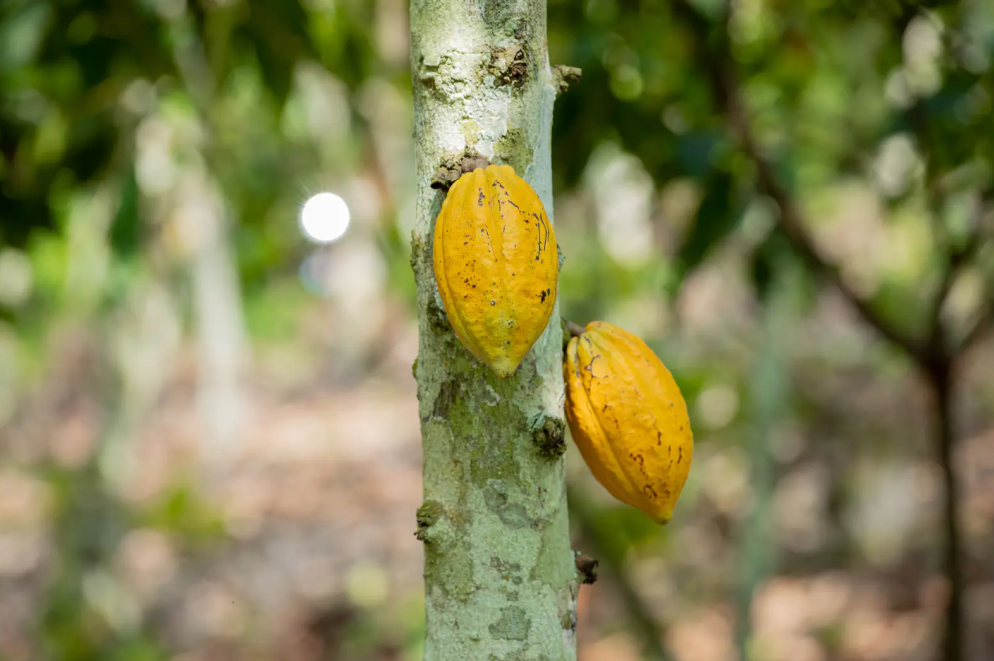
Cocoa is the essential ingredient behind every bar of chocolate. Around 5–6 million smallholder households, including approximately 472,000 Fairtrade farmers (1), produce about 90% of the world’s cocoa (2), supporting an estimated 50 million people along the supply chain. Most cocoa is grown in hot, humid regions, particularly West Africa, Latin America, and Southeast Asia, with Côte d’Ivoire alone responsible for around 40% of global production (3).
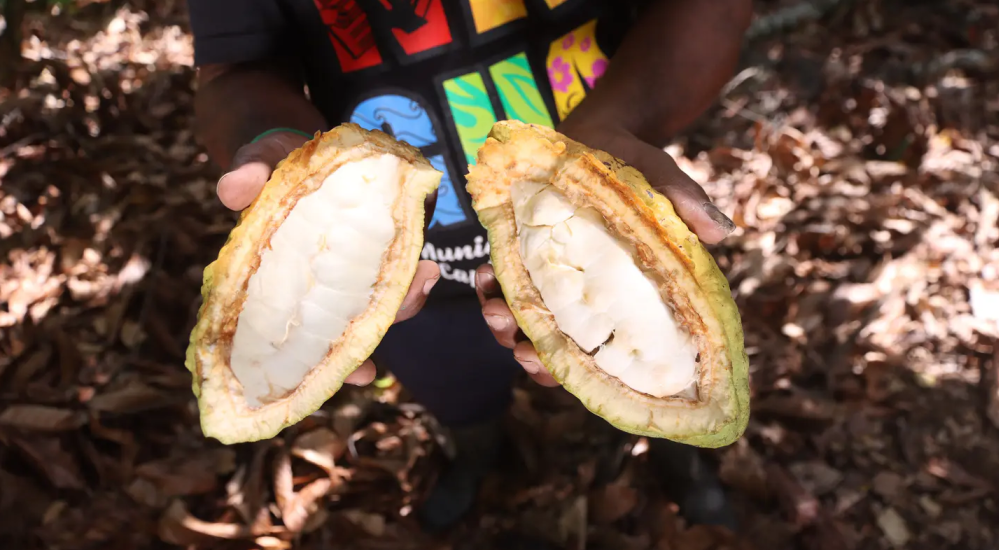
Cocoa farming is highly labour-intensive. Farmers harvest ripe pods by hand, open them to remove the wet beans, then ferment, dry, clean, and ship them for processing (1). Despite this hard work, many cocoa farmers still live in poverty. The global cocoa trade is dominated by a few major companies that control much of the market, leaving small-scale farmers with limited power over prices and profits.
To explore up-to-date insights into Fairtrade cocoa production, its global reach, and the impact Fairtrade is having for farmers and communities, visit the Fairtrade Cocoa Dashboard.
Challenges in Cocoa Sector
The cocoa industry faces a range of social, economic, and environmental challenges that threaten its long-term sustainability. Many smallholder farmers continue to live in poverty, earning well below a living income. Gender inequality remains widespread, limiting opportunities for women farmers, while child labour persists in parts of West Africa, where over 1.5 million children are estimated to be working on cocoa farms (1)
Power in the global chocolate market is heavily concentrated among a few major companies, leaving farmers with little influence over the prices they receive. These economic pressures often drive deforestation, as farmers expand into forested areas to increase yields, further harming local ecosystems (1)
Cocoa and Climate Change
The climate crisis is one of the greatest threats to cocoa production. Cocoa is a drought-sensitive crop that depends on stable rainfall and moderate temperatures. As droughts, tropical storms, and heatwaves become more frequent, yields are falling, and some regions are becoming unsuitable for cultivation (1).
A recent study by the University of Oxford found that cocoa production is increasingly at risk due to rising temperatures and declining pollination rates (4). This is especially concerning in West and Central Africa, which produce over 70% of the world’s cocoa (5). Shifts in rainfall patterns, soil degradation, and the spread of pests and diseases are already reducing productivity and putting millions of farming families under growing pressure. Climate change also worsens existing challenges. Unpredictable weather and falling yields limit farmers’ incomes, while deforestation, often driven by low prices and the need for more land, further accelerates global warming (6).
How Fairtrade Supports Both People and Planet
Over 450,000 Fairtrade cocoa farmers are working to make the cocoa industry fairer and more sustainable. Fairtrade helps farmers earn a decent livelihood through a Minimum Price that protects them when markets drop and a Fairtrade Premium invested in community priorities such as education, healthcare, and replanting cocoa trees. It also supports programmes in Côte d’Ivoire and Ghana to prevent child and forced labour, while initiatives like Fairtrade Africa’s Women’s School of Leadership promote gender equality and empower women to take leadership roles in farming cooperatives. Through cooperatives, farmers gain stronger bargaining power, fairer trade terms, and access to sustainable markets. Fairtrade also supports climate-smart farming, helping producers adapt to extreme weather, improve soil health, and restore biodiversity. In West Africa, the Fairtrade Cocoa Programme strengthens farmer organisations in Côte d’Ivoire, Ghana, and Sierra Leone, helping them build resilience and protect the environment.
An Example: Sankofa Project
The Sankofa Project in Ghana, launched with the Kuapa Kokoo Farmers Union, which promotes dynamic agroforestry, growing cocoa alongside other crops and trees to restore forests and increase income year-round. By 2025, over 1,400 farmers are expected to adopt these methods (1). To explore more insights, data, and stories about Fairtrade cocoa production and its global impact, visit the West Africa Cocoa Programme (WACP) Dashboard.
Fairtrade Chocolate on Campus
Our university is proud to support Fairtrade, helping to make a positive impact through the everyday choices we make. By choosing Fairtrade chocolate, you’re supporting farmers who receive fair pay, work in safer conditions, and gain the tools to adapt to climate change.
Below, you’ll find a list of campus locations where you can pick up your favourite Fairtrade chocolates.
References
- Fairtrade Foundation, 2025
- International Institute for Sustainable Development (IISD), 2023
- Food and Agriculture Organization of the United Nations (FAO), 2024 (Data from 2022).
- University of Oxford. (2025, February 14). New study highlights ways to future-proof cocoa production | University of Oxford. Ox.ac.uk. https://www.ox.ac.uk/news/2025-02-14-new-study-highlights-ways-future-proof-cocoa-production
- Asante, P. A., Rahn, E., Anten, N. P. R., Zuidema, P. A., Morales, A., & Rozendaal, D. M. A. (2025). Climate change impacts on cocoa production in the major producing countries of West and Central Africa by mid-century. Agricultural and Forest Meteorology, 362, 110393. https://doi.org/10.1016/j.agrformet.2025.110393
- Kongor, J. E., Owusu, M., & Oduro-Yeboah, C. (2024). Cocoa production in the 2020s: challenges and solutions. CABI Agriculture and Bioscience, 5(1). https://doi.org/10.1186/s43170-024-00310-6
